01
3D edits meant a full round-trip
One wrong texture meant a re-export from Blender, re-review, re-deploy — reprinting a book to fix one typo. Fine at a few assets a week. Brutal at dozens a sprint.
Scaled RT Studio from a 0 to 1 pilot into the platform that now powers 12 active game studios, the backbone of the Terra games ecosystem.
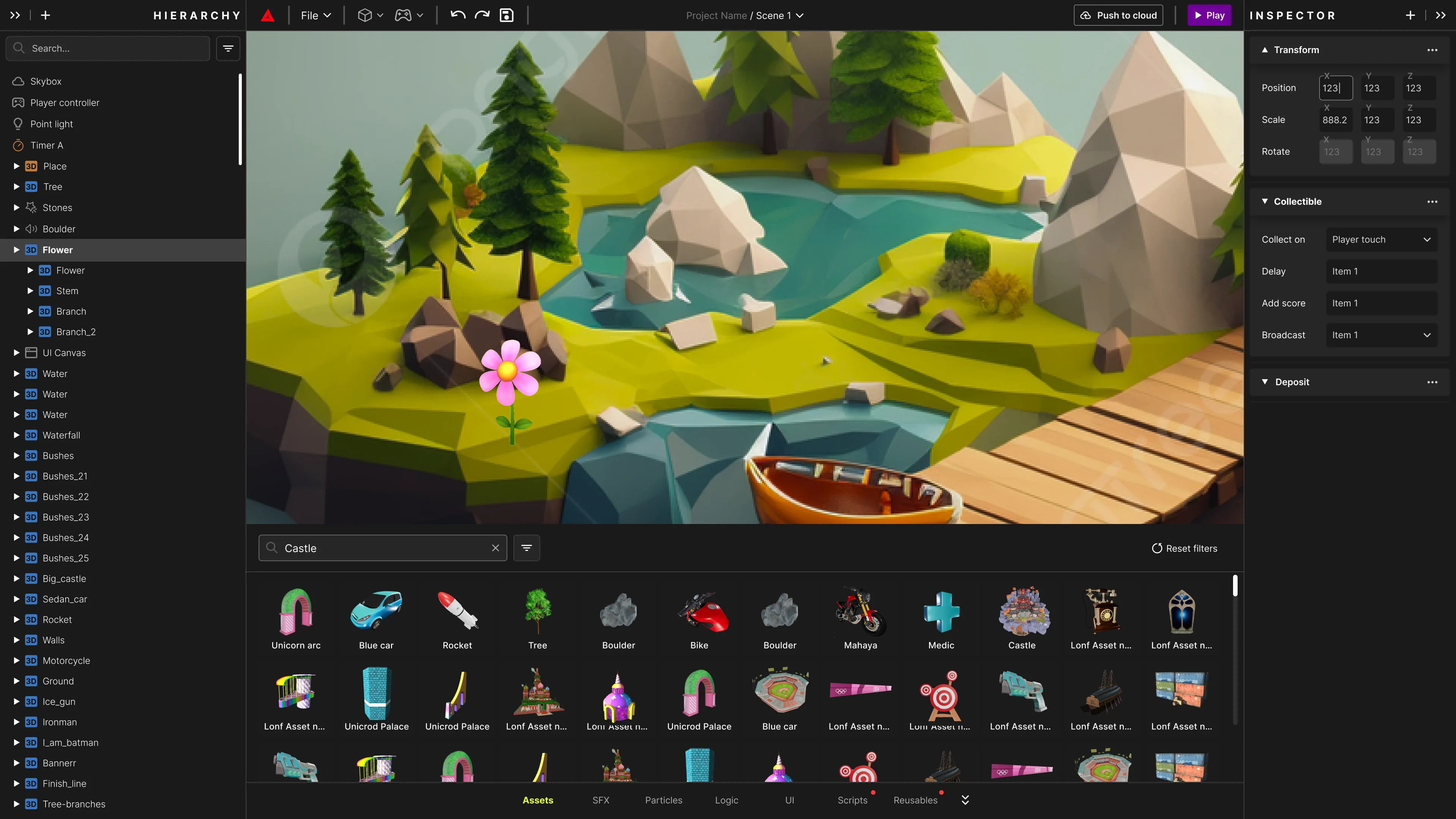
RT Studio was TERRA's native game-dev platform for Mac and Windows, where studios built, iterated, and shipped games to the Terra Platform. It bundled a 150k-asset catalog, 100+ no-code logic templates, prefabs, over-the-air deploy, version-controlled collaboration, and GenAI tooling for textures and code.
Note RT Studio ran as a private beta with 12 studios before TERRA pivoted to Flow, a Unity copilot chasing a different problem. What follows is the redesign that came before the pivot.
The business wanted to retain more players. That meant deeper games at higher fidelity.
Grow players on TERRA.
Growth runs through the studios: deeper games, longer retention.
Find where RT Studio caps what studios can ship. Then remove the cap.
I joined as the product designer, co-owning V2’s direction with engineering and PM. Every pillar had to be negotiated through the people who controlled whether it could ship.
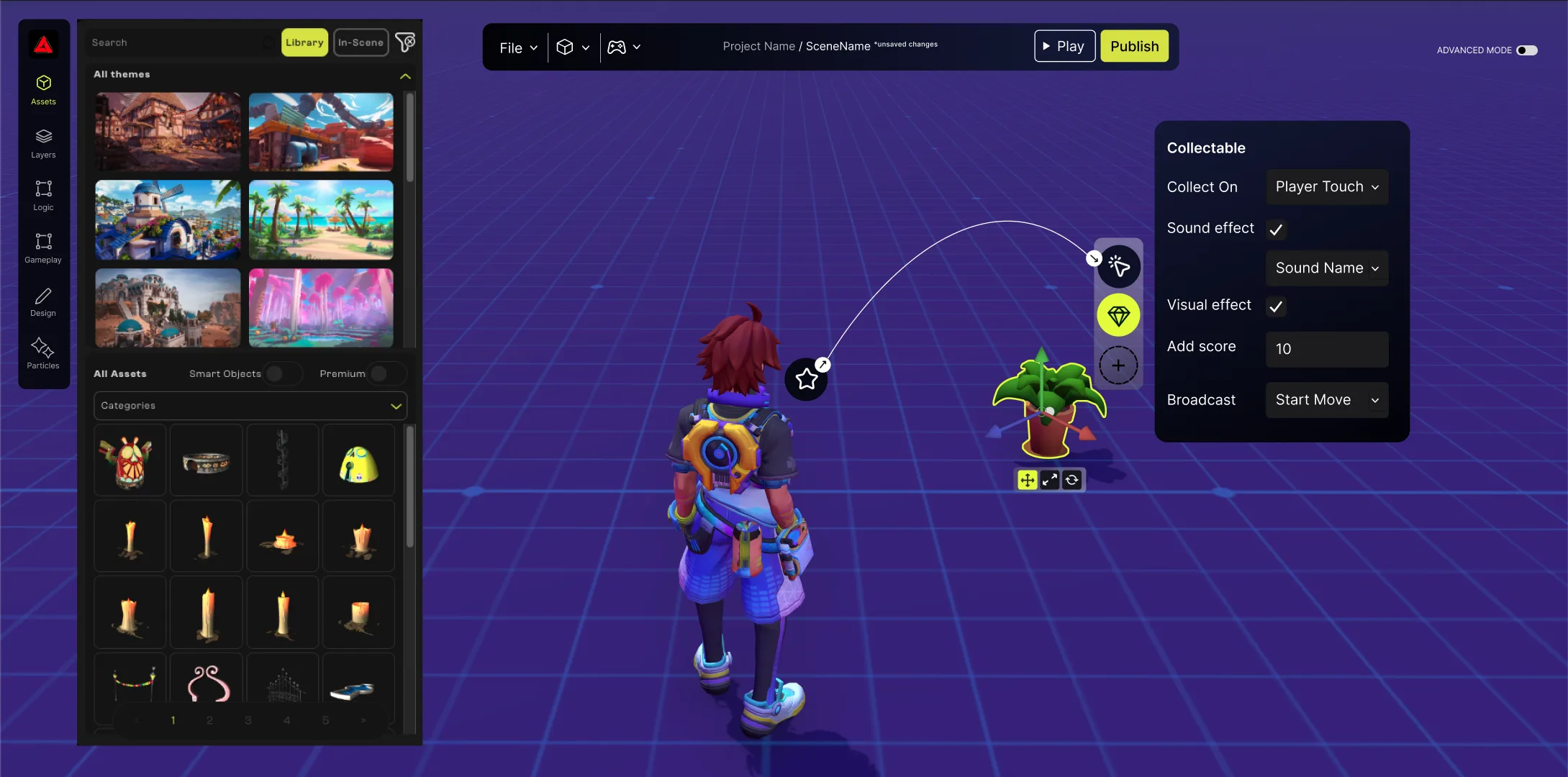
A runner, a shooter, an obstacle course. No engine setup, no boilerplate.
Compose scenes from 150k drop-in 3D models, SFX, VFX, and UI components.
Attach templates to any object — collectables, spawners, win states. ECS underneath, no code.
Playtest in-engine, tune, publish over-the-air. No app-store review cycle.
Beginners would drown in a full game-engine interface. A simplified Basic Mode would cut friction and grow the funnel.
Two teams kept a second system alive that almost nobody used. Not value. Debt.
Four ceilings, one per layer — assets, catalog, logic, collaboration. None were bugs. Each was right for V1’s scope. The new ambition outgrew them all.
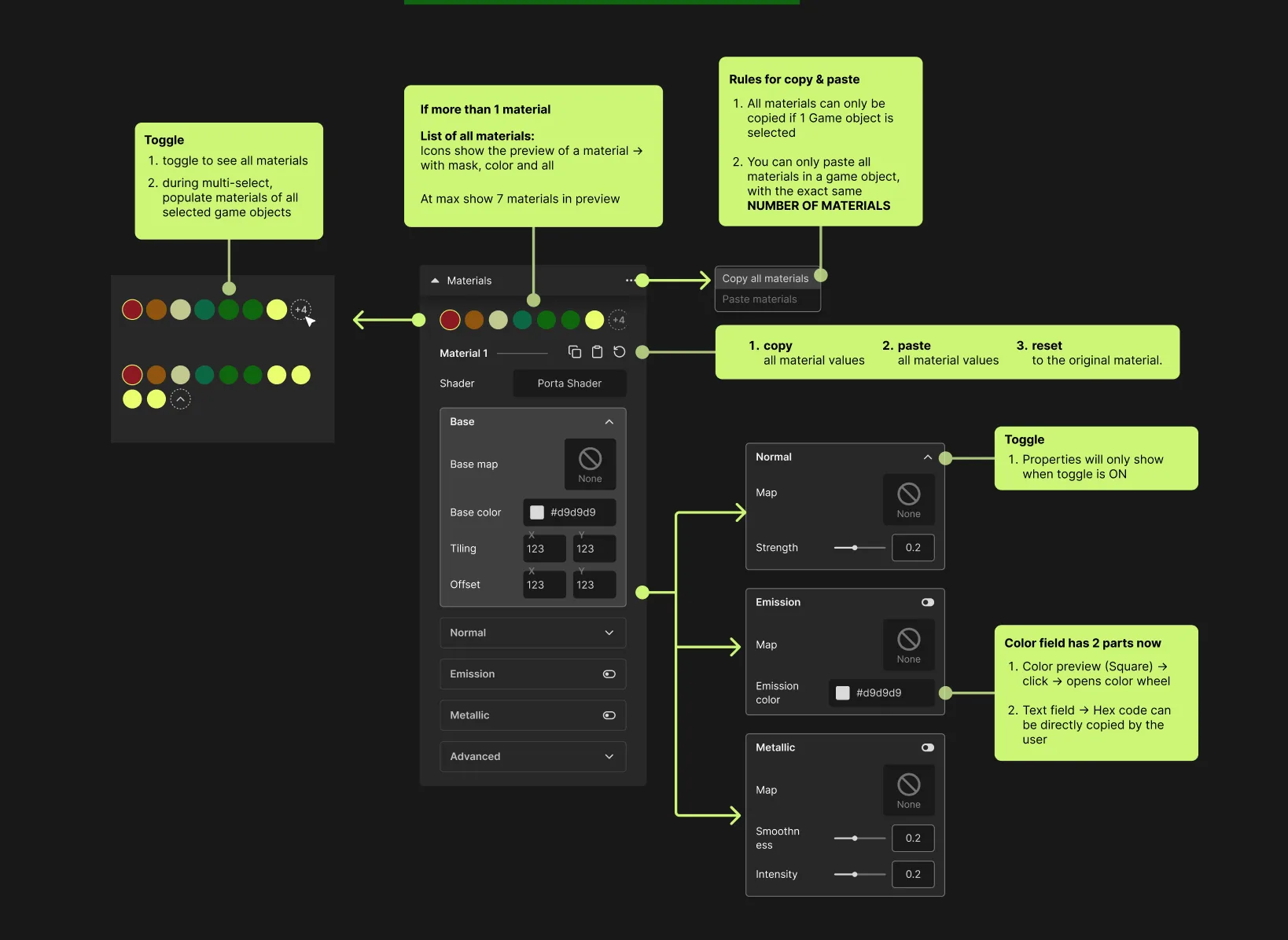
One wrong texture meant a re-export from Blender, re-review, re-deploy — reprinting a book to fix one typo. Fine at a few assets a week. Brutal at dozens a sprint.
150k assets, built in-house for simpler games. Higher-fidelity titles outgrew the catalog, and we couldn't model fast enough to close the gap.
Templates are Lego: quick for a house, hopeless for a detailed spaceship. Pickups and doors worked. Multiplayer sync, AI, and physics needed real code.
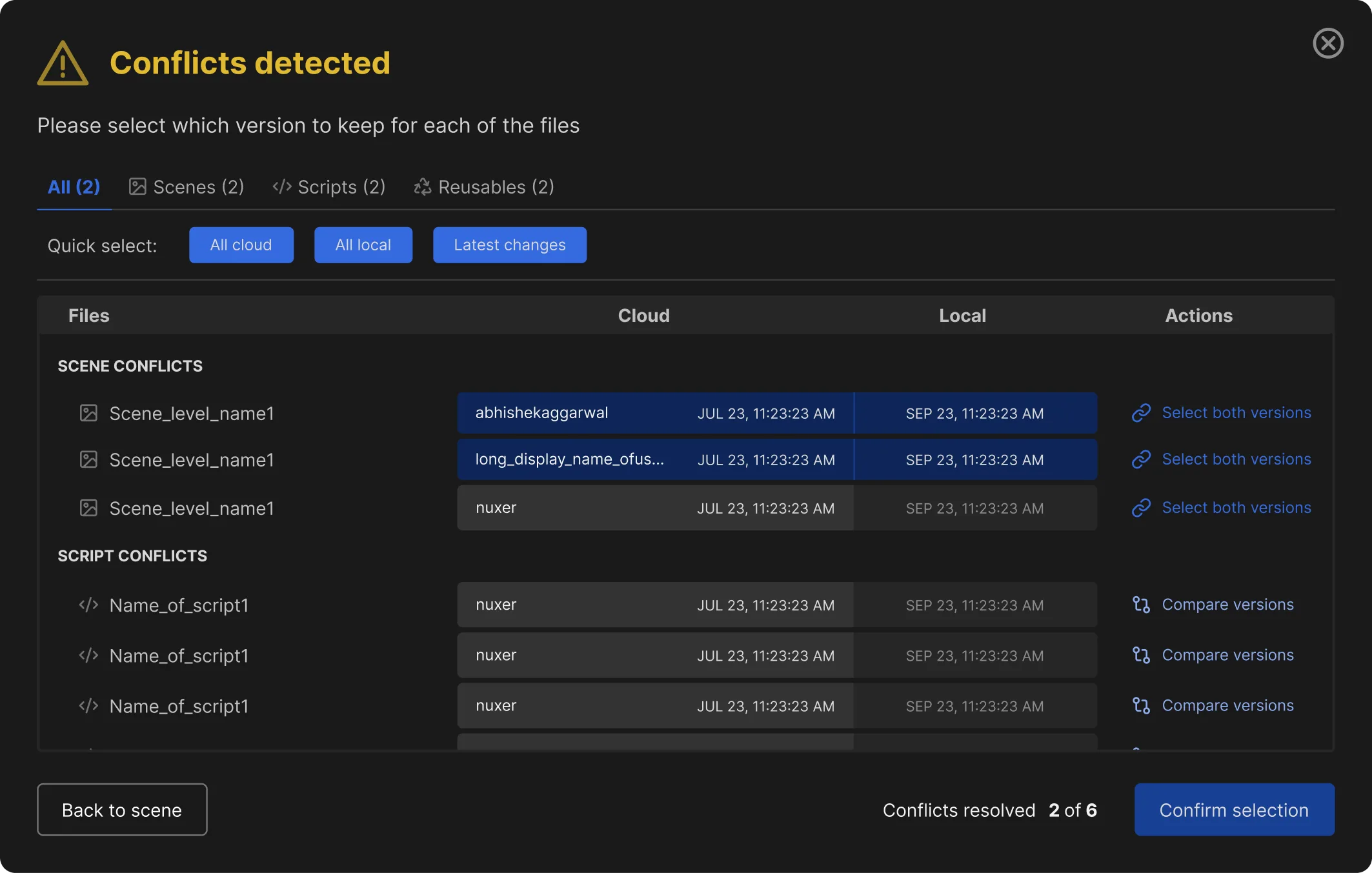
One shared scene, passed around like a single USB stick. Two editors meant a silent overwrite and a lost day. Fine for a trio, not for parallel teams.
V2 asked a different question: what made the platform rigid, and what would it take to bend? Four pillars, each a system built around how studios actually worked.
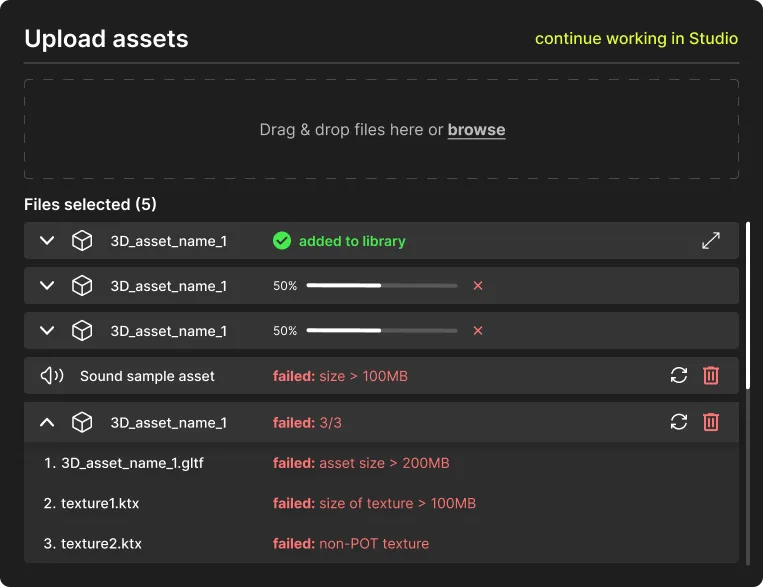
A pipeline that brings studios' own assets into the TERRA catalog as first-class, searchable, placeable items.
A C# wrapper with hot reload. Studios write and run their own game logic — no template request, no waiting on TERRA.
Git-style sync for shared scenes: push/pull, per-object conflict resolution, scene locking.
A redesign is easy to ship and hard to prove. So I checked three things:
Built on TERRA after V2 — from quick experiments to full productions.
A spatial signal — users built the right mental model. The new IA worked.
Material fixes land in place instead of round-tripping through a re-export.
Same tasks, same studios — measured before and after V2.
Our own packs sit right next to TERRA's, like they were always there.
 3D artist, internal studio
 A wrong texture used to cost three re-dos. Now I fix it in place and move on.
 Environment artist, internal team
 Behaviors we waited weeks for, we now write in T# and hot-reload the same day.
 Developer, internal team
 Rebuilt our inventory in V2 fast — far more usable than before.
 Developer, internal team
 TERRA pivoted to AI-built games. RT Studio’s architecture couldn’t run them, so the studio was shut down and the team moved to Flow, a Unity copilot. New question, and a commercial one: what could we build that made money?
The artifacts didn’t carry over. The methods did.
Three threads on Flow.
Figma → Unity was the worst bottleneck: devs rebuilt every handed-off layout by hand. UI Builder closed that gap.
One demo per persona. Not a feature tour — their pain, fixed, on screen.
Designed, built, and shipped it myself, then wired the analytics to see what people did once they landed.
Cold outreach qualified two clients before Flow wound down in late 2025.